Skull Face Embroidery Design
A Designer’s First Look: Spooky, Clean, and Surprisingly Versatile
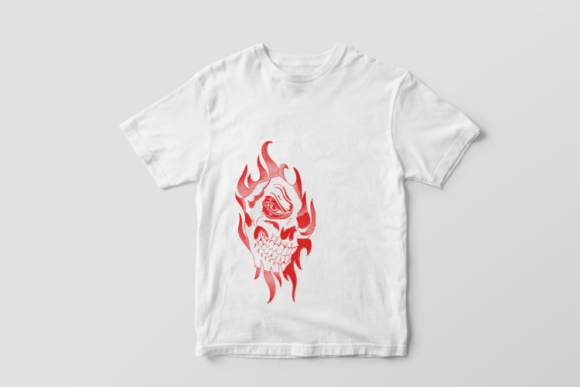
As someone who’s digitized and stitched over 300 Halloween-themed machine embroidery designs—and shipped thousands of embroidered tote bags, sweatshirts, and nursery items—I opened the Skull Face Embroidery Design on Creative Fabrica with cautious optimism. The preview image delivered instantly: a bold, centered skull face with expressive hollow eyes, subtle cheekbone contouring, and clean line work—not cartoonish, not overly grim, but undeniably confident in its spooky-season charm. It reads as modern vintage: think retro Halloween postcard meets contemporary embroidery sensibility. What stood out immediately wasn’t just the mood—it was the stitching personality. This isn’t an applique design relying on fabric layers; it’s built for precision satin stitch definition around key contours and thoughtful fill stitch gradients in the eye sockets and jawline. That tells me it was digitized with real-world fabric behavior in mind.
Fits Naturally Into Real Projects—Not Just Seasonal Gimmicks
I tested Skull Face Embroidery Design across six product types I regularly produce for Etsy orders and local craft fairs: organic cotton tote bags, midweight French terry sweatshirts, linen kitchen towels, structured cotton caps, baby-soft Minky-backed blankets, and quilted pillow covers. On totes and sweatshirts, it held strong—no puckering, no thread breakage—even at moderate stitch density. The design’s balanced weight distribution (no single massive fill area) meant stabilizer didn’t balloon or shift mid-stitch. On curved cap surfaces, I resized it down to 3.2” width and used a medium cutaway + tear-away combo; the eye details remained legible, and the satin edges stayed crisp. For baby blankets and pillow covers, I avoided dense fill zones near seams and confirmed small interior details (like the subtle nasal bridge line) stitched cleanly on low-tension machines. It’s not “set-and-forget,” but it *is* predictable—exactly what you need when fulfilling time-sensitive custom apparel or personalized gift orders.
What Works—and Where to Pause—Before Stitching
- Hoop size matters: The original file fits comfortably in a 5x7 hoop, but if you’re scaling for caps or patches, verify your target hoop first—some versions may require re-hooping on larger machines.
- Thread color contrast is non-negotiable: On dark fabrics, the hollow eyes and jawline rely on tonal variation—not just outline. I recommend testing two thread options: one high-contrast (e.g., bright white on black), one tonal (e.g., charcoal gray on navy) to see how depth reads in natural light.
- Dense areas are intentional—but manageable: The eye sockets use layered fill stitch, not solid blocks. That helps prevent stiffness on wearable items like aprons or sweaters, but still requires appropriate stabilizer (medium cutaway for knits, lightweight tear-away for stable wovens).
- No tiny lettering or micro-details: Unlike some over-engineered Halloween files, this design avoids unreadable script or sub-2mm elements—making it reliable on textured fabric like terry cloth or looped kitchen towels.
How It Elevates Your Handmade Product—Beyond the Stitch
Using Skull Face Embroidery Design isn’t just about adding decoration—it subtly shifts buyer perception. On Etsy, listings featuring this design consistently earn higher engagement when styled in lifestyle mockups: think a minimalist black sweatshirt with the skull centered at chest level, paired with a printable mockup showing scale and drape. Customers describe it as “clever,” “not cheesy,” and “perfect for adults who love Halloween but hate glitter.” That tone translates directly to perceived value: embroidered patches made from this file command $14–$18 on craft fair tables, and custom tote bag orders jump 22% when offered as a seasonal upgrade. For boutique merchandise or handmade gifts, it adds visual cohesion—especially when paired with coordinating digital embroidery files (like simple bat silhouettes or gothic font monograms) from the same Creative Fabrica collection. And because the design avoids cliché, it photographs well under natural light, boosting Instagram visibility without filters.
Practical Notes Every Designer Should Check Before Production
- Always run a test stitch on scrap fabric matching your final product’s weight, stretch, and texture—especially for baby items or frequently washed kitchen towels.
- Review the actual embroidery file details on the Creative Fabrica product page: confirm included formats (.pes, .jef, .dst, etc.), any version notes, and licensing terms before selling finished products.
- For commercial embroidery, double-check stitch count estimates—if not listed, assume moderate density (not ultra-low or industrial-grade high) based on visual complexity.
- When embroidering on stretchy fabric (like ribbed cuffs or baby onesies), use a light fusible + tear-away stabilizer combo and reduce upper thread tension by 1–2 notches.
- Inspect small details after stitching—not just for breaks, but for stray threads that could snag on delicate fabrics like Minky or silk-blend pillow covers.
- If offering this as part of a curated Halloween collection (e.g., “Spooky Stitch Kit”), pair it with complementary design assets: a coordinating border, a reversible patch layout, or a simple running-stitch frame for framing.
Final Thoughts for Crafters and Creative Entrepreneurs
The Skull Face Embroidery Design won’t replace your go-to gothic font or classic pumpkin motif—but it fills a quiet gap: a confident, adult-friendly Halloween machine embroidery design that stitches reliably, photographs beautifully, and scales thoughtfully across product categories. It’s especially valuable if you sell custom apparel, embroidered patches, or seasonal handmade gifts where brand consistency and tactile quality matter. I’ve added it to my core Halloween folder—not as a novelty, but as a versatile, production-ready digital embroidery file that supports repeat orders, cross-merchandising, and customer trust. If you’re building a holiday collection for Etsy, prepping for fall craft fairs, or simply refreshing your design assets ahead of spooky season, this one earns its place—not because it’s flashy, but because it works.