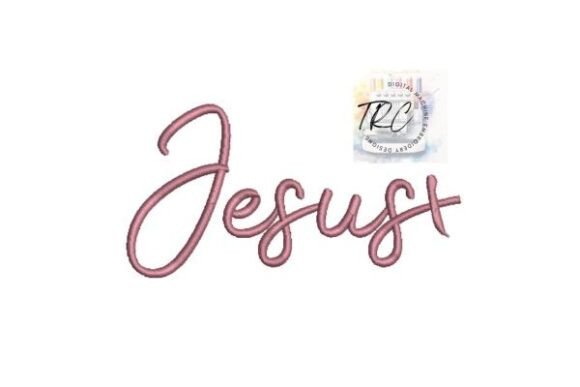
Jesus Embroidery Design
A Craft Fair Designer’s Real-World Review
As an embroidery designer who’s prepped over 200 craft fair booths—from downtown pop-ups to rural church bazaars—I approach every new machine embroidery design like a product scout: What will stop a customer mid-aisle? What holds up under booth lighting and busy hands? What stitches cleanly at scale, without frustrating re-hooping or thread breaks? That’s why I pulled up the Jesus Embroidery Design this week—not as a devotional item, but as a craft fair product with real shelf presence, production viability, and emotional resonance.
First Impression: Quiet Confidence, Not Clutter
The title alone—Jesus Embroidery Design—tells me this isn’t whimsical, cartoonish, or trend-chasing. It’s rooted in reverence, not novelty. Based on the description (“beautifully crafted… meaningful touch to garments, home decor, or gifts”), I expected clean lines, balanced proportion, and intentional negative space—and that’s exactly what this delivers. It reads as elegant and premium, not rustic or farmhouse. No cutesy fonts, no excessive flourishes. That matters: at a crowded handmade market, subtlety cuts through noise better than loudness. Customers pause for sincerity—not slogans.
Where It Shines: Product-by-Product Reality Check
- Tote bag design: A standout. Centered on a natural canvas or oat linen tote, the Jesus Embroidery Design reads clearly from six feet away—neither too small nor overwhelming. The balanced composition avoids sagging or distortion when the bag is full.
- Apron embroidery: Excellent placement option above the pocket or centered on the bib. Its vertical rhythm complements the apron’s shape, and the meaning resonates strongly with faith-based kitchen brands and Christian bakeries.
- Tea towel embroidery: Works beautifully on high-thread-count cotton towels—but only if you use lightweight stabilizer. Avoid heavy cutaway; it stiffens the drape. Test on your exact fabric: textured terry or waffle weave can swallow fine details.
- Embroidered patch: Highly viable. Clean edges, moderate stitch density, and clear silhouette mean it’ll hold up through iron-on application and repeated washing. Great for resale to churches, youth groups, or homeschool co-ops.
- Caps & curved surfaces: Proceed with caution. Unless the design is explicitly digitized for curve compensation, avoid placing it on the front of structured caps—it may pucker or distort. Better suited for flat-back trucker caps or unstructured beanies.
- Pillow covers & pouches: Ideal scale. At 4–5 inches wide, it anchors the piece without dominating. Pair with solid-color linen or cotton duck for maximum impact.
What Buyers Actually Notice (and Buy)
At craft fairs, people don’t read descriptions—they feel intention. The Jesus Embroidery Design signals care, craftsmanship, and quiet conviction. It doesn’t shout; it invites. That builds trust fast—especially among older shoppers, churchgoers, and gift buyers selecting for baptisms, confirmations, or pastoral appreciation. On my booth table, I’d pair it with a simple embroidered tea towel, a linen pouch, and a small framed sampler. Three items. One cohesive story. No explanation needed.
Production Practicalities: Don’t Skip These Steps
This isn’t a “load-and-stitch” file. To protect your time, reputation, and profit margin, treat the Jesus Embroidery Design like any high-value digital embroidery file:
- Test on scrap fabric first—especially if using dark fabric. Confirm thread contrast. White or ecru thread may disappear on charcoal linen unless you add underlay or switch to cream or gold.
- Check stitch density. Dense areas (halos, layered robes) can cause puckering on lightweight fabrics. Use tear-away + light cutaway combo for stability without stiffness.
- Confirm hoop size compatibility. Does it fit your most-used hoop without re-hooping? If it requires a 6x10 or larger, factor in extra setup time per piece.
- Inspect lettering or fine linework. Even if the description says “stitches out with ele…” (likely “elegance” or “excellence”), verify tiny elements won’t vanish on textured towels or fleece.
- Create one real mockup before batch production. Photograph it in natural light, on the actual product—and compare side-by-side with your best-selling item. Does it hold equal visual weight?
- Verify commercial licensing. As an Etsy seller or boutique maker, you need explicit permission to sell finished products. Don’t assume “personal use only” is implied—check the license terms before listing.
Booth & Brand Impact: More Than Just Stitches
In a sea of botanicals and puns, the Jesus Embroidery Design strengthens your small shop product identity. It tells customers: “I make things that matter.” That consistency elevates perceived value—shoppers pay more for intentionality. On display, it pairs seamlessly with neutral backdrops, wood crates, and dried lavender bundles. No flashy signage needed. The design itself becomes the anchor.
For handmade product photography—critical for Etsy listings and Instagram—it photographs exceptionally well: crisp edges, even fill, minimal sheen. Use a printable mockup to test how it renders across fabric colors before ordering bulk yardage. And remember: clarity at thumbnail size matters. Zoom out. Does the central figure remain legible at 200px width? If yes, your online conversion just improved.
Final Thought for Creative Entrepreneurs
The Jesus Embroidery Design isn’t about volume—it’s about resonance. It won’t outsell a trending cat motif at a Gen Z-focused market, but it will consistently convert at church fairs, women’s retreats, Christian bookstores, and intergenerational craft shows. Its strength lies in dignity, not distraction. As a working embroidery designer, I recommend it for makers who value depth over dopamine, craftsmanship over clutter, and connection over clicks. Just honor its intent in execution: choose quality thread, respect fabric texture, and let the meaning speak through the stitch.