Heart Tree Embroidery
First Impression: Sweet, Timeless, and Booth-Ready
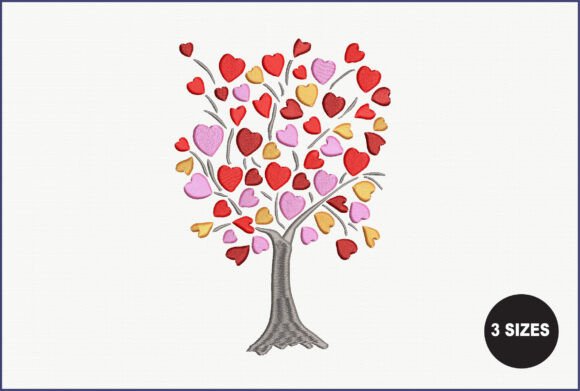
As an embroidery designer who’s prepped over 200 craft fair booths—and shipped thousands of finished products—I opened Heart Tree Embroidery expecting charm. What I got was something sharper: a design that balances romantic warmth with clean visual structure. It doesn’t scream “Valentine S Day” in glittery cliché—it whispers it with intention. Think soft curves, balanced negative space, and a silhouette that reads clearly at 3 inches *or* 8 inches. It’s neither overly rustic nor ultra-minimal. It lands in that sweet spot: elegant but approachable, festive but wearable year-round. That duality is gold for handmade markets—where shoppers want meaning without sentimentality.
Where Heart Tree Embroidery Shines on Craft Fair Products
This isn’t just another machine embroidery design—it’s a versatile visual anchor. Here’s where it performs strongest in real booth conditions:
- Tote bag design: Centered on a natural canvas or oatmeal linen tote, Heart Tree Embroidery becomes an instant conversation starter—soft enough for moms, refined enough for boutique buyers.
- Apron embroidery: Placed just above the pocket on a denim or chambray apron, it adds quiet personality without competing with stains or flour dust.
- Tea towel embroidery: On a tightly woven cotton or linen tea towel, the heart-and-branch motif reads beautifully—even from across the aisle. No tiny details get lost in the weave.
- Embroidered patch: As a sew-on or iron-on patch, it scales down cleanly. Perfect for attaching to denim jackets, market bags, or kids’ backpacks—adding handmade value in seconds.
- Pillow cover & pouch accents: At 4–5 inches wide, it anchors solid-color linen or velvet pillow covers and fabric pouches without overwhelming texture.
It’s less effective on curved cap surfaces (unless resized and re-digitized) or dense, napped fabrics like terry cloth towels—more on that below.
What Makes This Design Sell—Beyond the Stitch
At a crowded craft fair, attention lasts 1.7 seconds. Heart Tree Embroidery wins that glance because it’s instantly legible, emotionally resonant, and photograph-ready. On Etsy listings, it pops against neutral backdrops—no need for heavy filters or staging. As a digital embroidery file, it supports quick batch production: consistent spacing, predictable hoop size requirements, and moderate stitch density that won’t gum up your needle on mid-weight cottons or quilting fabrics.
More importantly, it feels repeatable—not repetitive. You can offer it across six product types (tote, apron, towel, patch, pouch, pillow) and still maintain brand cohesion. Customers recognize your shop’s hand—not just the design—but the care behind its placement, thread colors, and fabric pairing.
Careful-Use Notes Every Embroiderer Should Check
Before cutting into your best linen or loading 50 caps, pause here:
- Dense stitch areas: The trunk and heart junction may carry higher stitch density. Test on scrap fabric with your intended stabilizer—especially for lightweight knits or textured tea towels.
- Small lettering? Not present—this is a symbol-based design, so no legibility risk at smaller sizes. A major win for patches and pouches.
- Dark fabric: Works well, but confirm thread contrast. Rich burgundy or charcoal thread on black linen reads deeply romantic; pastel thread may disappear.
- Curved surfaces: Avoid direct cap embroidery unless you’ve verified the file includes underlay and pull compensation—or plan to use a cap frame and low-profile bobbin case.
- Fabric texture: On heavily textured towels or bouclé, reduce density slightly or opt for a simplified version if offered in the embroidery file bundle.
Design Assets That Strengthen Your Handmade Product Line
The phrase “This machine embroidery design comes with multiple embroidery file f” suggests flexibility—but don’t assume. Before listing as a small shop product or scaling for commercial embroidery, verify:
- Which formats are included (PES, DST, JEF, EXP)?
- Is there a single-size version only—or scalable vector assets for printable mockups?
- Does the license permit finished product sales? (Critical for Etsy sellers and craft fair vendors.)
Always create at least one real mockup—not just a digital preview. See how thread colors interact with your actual fabric swatches. Hold it up beside your other bestsellers. Does Heart Tree Embroidery elevate your booth display strength—or blend in?
Final Designer Notes Before Booth Day
From one embroidery professional to another—here’s my checklist before cutting, hooping, or pricing:
- Test the design on scrap fabric using your exact thread colors and stabilizer combo.
- Review spacing: Does the heart clear the edge on your smallest tote bag? Does the tree fit comfortably inside your standard hoop size?
- Inspect stitch density visually—not just in software. Dense fills heat up needles; sparse fills lack impact.
- Use the right stabilizer: Tear-away for stable wovens, cut-away for knits, and heavy cut-away + topping for textured towels.
- Create at least one physical sample—photograph it in natural light, then side-by-side with your current top-selling item.
- Compare fabric colors: A warm ivory linen vs. cool gray chambray changes the entire mood of Heart Tree Embroidery.
- Confirm commercial licensing terms—don’t risk a takedown or lost sales day.
When done right, Heart Tree Embroidery doesn’t just decorate a product—it deepens perceived value, invites touch, and quietly tells your customer: This was made with thought, not just speed. That’s what turns a $24 tote into a keepsake—and a craft fair table into a destination.