Elegant Deer Embroidery Design
First Impressions: Grace, Not Gimmick
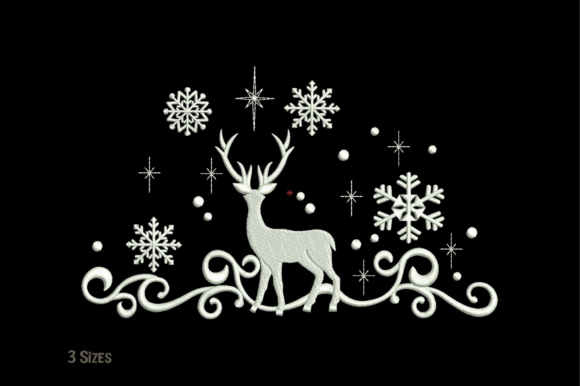
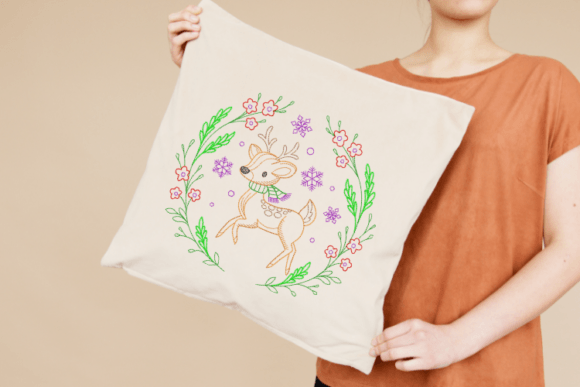
When I opened the Elegant Deer Embroidery Design file, what struck me wasn’t just the silhouette—it was the quiet confidence in its posture. This isn’t a cartoon fawn or a stylized vector; it’s a mature, grounded deer with subtle neck curvature, softly layered antlers, and fine-line detailing around the eye and muzzle. The composition leans slightly left, giving natural breathing room—ideal for centering on a tote bag or nesting neatly on a baby onesie chest. As someone who reviews hundreds of machine embroidery designs each year, I appreciate how this one avoids visual clutter while still feeling rich. It reads as “Baby Animals” only in spirit—not through cutesy exaggeration, but through gentle scale and restrained elegance.
A Real Project Test: Embroidering a Linen Kitchen Towel
Last week, I stitched the Elegant Deer Embroidery Design onto a heavyweight natural linen tea towel—no applique, no background fill, just clean satin and fill stitch work over tear-away + cut-away stabilizer. Why this combo? Because linen’s slub texture and low stretch expose weaknesses fast. And here’s what held up: the antler tips stayed crisp (no thread shredding), the inner ear detail resolved clearly at 3.5" wide, and the negative space around the deer’s legs didn’t collapse into muddy fill. What didn’t translate perfectly? A few ultra-fine running-stitch accents near the hooves softened on dark charcoal fabric—I swapped to a higher-contrast thread (ecru instead of oat) and regained definition. That’s not a flaw in the design; it’s a reminder that Elegant Deer Embroidery Design rewards thoughtful thread selection, not just automatic stitching.
Where It Shines—and Where It Asks for Care
This design excels in projects where subtlety builds value: personalized baby blankets, boutique aprons for herbalists or bakers, minimalist sweatshirt embroidery for small shop merchandise, and holiday gifts like embroidered pillow covers for woodland-themed nurseries. Its balanced stitch density means it lies flat on medium-weight cottons and stable knits—no puckering on toddler sweatshirts or structured tote bags. It also scales well: at 4.2", it anchors a cap front without overwhelming; at 2.8", it becomes a refined accent on a onesie collar or tea towel corner.
But it’s not universally forgiving. On thin rayon challis or highly textured bouclé, I’d recommend testing with reduced density or switching to an applique version if available. Curved surfaces—like the crown of a dad cap—require careful digitizing adjustments; the current layout assumes a flat or gently contoured surface. And while the design avoids tiny lettering or micro-details that vanish at small sizes, don’t push it below 2.2" without verifying stitch integrity on your machine first. Dense fill areas (like the shoulder curve) benefit from quality cut-away stabilizer on stretchy fabrics—especially for custom apparel sold to customers who wash frequently.
What It Adds to Your Finished Product
Customers don’t buy stitches—they buy feeling. The Elegant Deer Embroidery Design conveys calm intentionality. When stitched cleanly, it elevates a plain kitchen towel into a curated gift. On a baby onesie, it reads as heirloom-quality, not mass-produced. For Etsy sellers, that translates directly to higher perceived value, fewer returns due to “not what I expected,” and repeat buyers who trust your eye for refined design assets. It also supports brand consistency: whether you’re embroidering nursery decor or small-batch apparel, this deer carries a cohesive, nature-rooted voice—no jarring contrast between your Instagram mockups and the physical embroidered patch in hand.
Designer Notes You’ll Actually Use
- Always test on scrap fabric first—especially with textured or dark backgrounds. Linen, terry cloth, and midweight denim all behave differently under the same Elegant Deer Embroidery Design file.
- Review thread color contrast early. This design relies on tonal layering—not bold outlines—so mismatched thread shades flatten its depth. Try grayscale mockups before finalizing.
- Check stitch density in the shoulder and antler base. Overly dense fills can cause stiffness on soft baby embroidery or lightweight tote bags. If needed, reduce density by 5–8% in those zones.
- Confirm hoop size compatibility. The design fits comfortably in a 5x7 hoop—but verify clearance if pairing with text or borders in your layout software.
- Use proper stabilizer for your fabric type. Tear-away works for stable wovens; cut-away is non-negotiable for knits or anything meant for regular washing.
- Verify licensing before selling finished items. Since this is marketed as a digital embroidery file, confirm whether commercial use is permitted for both physical products and printable mockups used in your Etsy listings.
Final Thought: A Design That Serves the Maker
The Elegant Deer Embroidery Design doesn’t shout. It doesn’t need glitter or exaggerated features to hold attention. Instead, it gives crafters and creative entrepreneurs something rare: a versatile, quietly sophisticated embroidery file that performs consistently across real-world materials and use cases—from baby embroidery to holiday embroidery, from custom apparel to boutique branding. It respects the time you invest in your craft business. It trusts your judgment as a designer. And when stitched well, it reminds your customers why handmade product feels different: because every detail, from the curve of an antler to the spacing of a fill stitch, was considered—not just calculated.